Christmas Appetizer Ideas Are Surging: Plan the Table Before the Menu
Before saving another holiday recipe, map out where plates, serving spoons, and guests will actually go. With early seasonal searches rising, a calm Christmas spread depends less on elaborate dishes and more on smart zones, clear labels, and effortless cleanup.
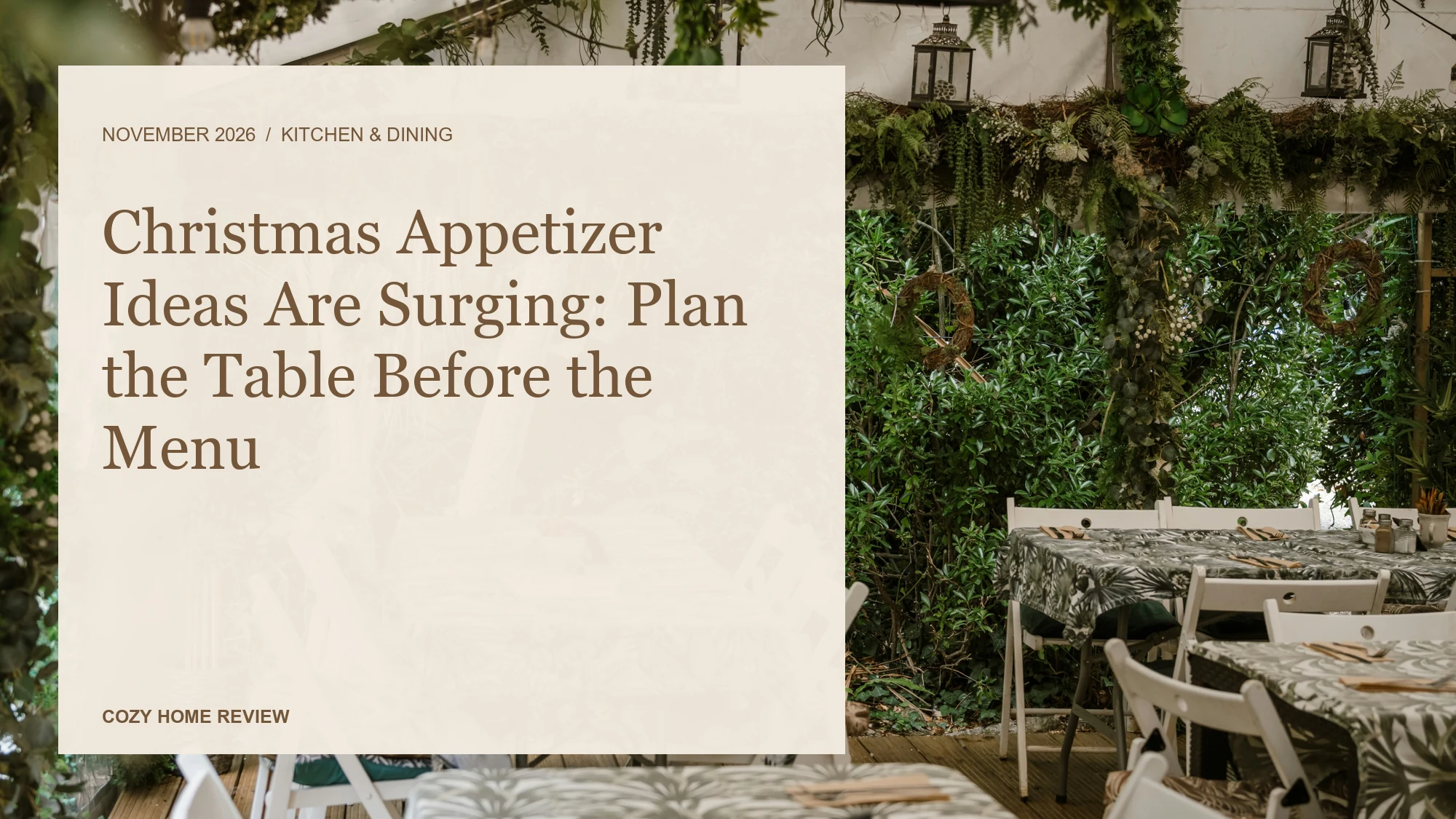
The calmest way to host a holiday gathering is to map your serving surface before choosing a single recipe. Deciding how many platters your table can comfortably hold—and where guests will stand, reach, and set down a napkin—prevents crowded corners, abandoned plates, and a sink full of mismatched bowls.
In a November 12, 2026 holiday update, Pinterest reported year-over-year rising platform searches for Christmas appetizers—early browsing inspiration rather than retail sales or completed menus, making it a practical cue to audit your space before shopping. If you are organizing ideas digitally in the United States, Pinterest’s Compare feature is also available through mobile boards and desktop Closeup views to review saved table layouts side by side.
Audit Surfaces and Traffic Before Shopping
Appetizer spreads fail most often when every dish lands on one central island or dining table. Guests pause to chat right where they pick up a plate, blocking everyone behind them. Before making a grocery list, walk the path a guest takes from the front door to a drink, and then to food.
Breaking your spread into distinct stations keeps conversation flowing without forcing people to reach across each other. Split your available furniture into dedicated roles:
- The Entry Clear Zone: Keep coats, bags, and gift drops away from food surfaces so guests have free hands before entering the main room.
- The Drink Perch: Place glasses, ice, and bottle openers on a bar cart, desk, or sideboard across the room from the main food spread.
- The Main Grazing Surface: Reserve a dining table, peninsula, or cleared console for dishes that require a plate, tongs, or a spreader.
- Satellite Bowls: Tuck dry, one-bite items—mixed nuts, olives with a pit dish beside them, or crisp crackers—onto coffee tables and bookshelves where people naturally sit.
Match Platter Scale to Your Furniture
Visual clutter makes a generous spread hard to navigate. Instead of cramming a dozen small bowls onto a narrow sideboard, anchor the surface with fewer, wider platters and leave visible breathing room between them. Every serving board needs landing space next to it so a guest can steady a small plate while lifting food.
| Furniture Type | Comfortable Dish Capacity | Best Appetizer Formats | Traffic Rule |
|---|---|---|---|
| Narrow Console against a Wall | Three to four medium platters in a single row | Dry finger foods, sliced breads, pre-portioned skewers | Stack plates at the far left; place napkins and forks at the far right so the line moves one way. |
| Kitchen Island or Dining Table | Five to six varied platters with two-sided access | Spreads with crackers, layered dips, hearty savory bites | Put tall floral arrangements or candlesticks elsewhere so guests can reach comfortably from both sides. |
| Coffee Table or Side Table | One to two low, heavy bowls | Dry snacks that need no utensils or plates | Leave half the surface empty so guests have an obvious spot to set down drink glasses. |
Solve the Utensil, Napkin, and Label Bottleneck
Guests hesitate when they cannot tell what is inside a pastry puff or how they are supposed to pick it up. Dedicated tools and brief written cards spare you from repeating ingredients every time the doorbell rings.
Give every shared dish its own serving tool—even items that seem easy to grab by hand, like sliced cheeses or clustered grapes. Rest each spoon, spreader, or pair of small tongs on a dedicated saucer beside the platter rather than balancing the handle on the rim of the food bowl, where it inevitably slides in. Folded cloth or paper napkins work best at both ends of a table, paired with small cocktail plates that fit comfortably in one palm.
Handwritten folded cardstock labels do quiet heavy lifting when dietary needs vary. Keep cards short and factual—name the item and note common ingredients like nuts, dairy, gluten, or pork so guests can choose confidently without asking.
A Hypothetical Living Room Layout
Imagine hosting twelve people in a modest apartment where the dining table seats only four. Push that table partway toward a living room wall, leaving enough room to access three sides. Set stackable small plates at the left corner, followed by one wide wooden board of savory bites, a shallow bowl of dip flanked by crackers, and folded napkins at the right corner. Move drinks onto a cleared hallway dresser, and place two small bowls of spiced nuts on the windowsill and coffee table. Nobody gets trapped in a narrow kitchen, and the stove stays completely clear.
Build Invisible Cleanup Into the Setup
A calm table loses its charm the moment used toothpicks, olive pits, and crumpled napkins have nowhere to go. Guests rarely want to wander into your kitchen looking for a trash bin mid-conversation, so they tuck used items onto the nearest bookshelf or plate edge.
Prevent pileups by placing small, unmistakable discard vessels right next to anything with stems, shells, peels, or skewers. A ceramic ramekin seeded with one clean toothpick signals its purpose immediately. Tuck a lined wastebasket beside the drink station for paper napkins and bottle caps, and clear a single tray on the kitchen counter before anyone arrives so empty platters have an instant landing pad.
Before opening a single recipe tab tonight, walk to the surface you plan to use this December and set out your empty serving platters, utensil saucers, and plate stack. Count how many vessels actually fit while leaving comfortable space for a guest’s glass—that exact number is your menu limit.
Related reading
- The Ski-Mug Trend: How to Choose a Mug for Daily Use
- Luxury-Look Gift Wrapping Without a Drawer of Single-Use Supplies
Sources and editorial notes
Research checked November 15, 2026. This is a research-based editorial guide, not a hands-on product test. Suggestions and hypothetical examples are our editorial interpretation; current prices, availability and terms should be checked with the provider.
A Shared Kitchen Schedule for Holiday Houseguests
Hosting overnight guests in a compact kitchen requires clear boundaries around counter space and cleanup. Use our printable daily time slots, shared pantry…
Before Buying a Kitchen Appliance on Black Friday
Major seasonal sales often tempt home cooks with bulky countertop machines that rarely leave the cabinet after December. Before adding an discounted appliance…