A Holiday Lighting Plan Using the Lamps You Already Own
Give every lamp a job before guests arrive. This one-room worksheet helps you choose what people notice from the doorway, check for distracting reflections from a chair, and write a short switch list for arrivals, conversation, and cleanup.
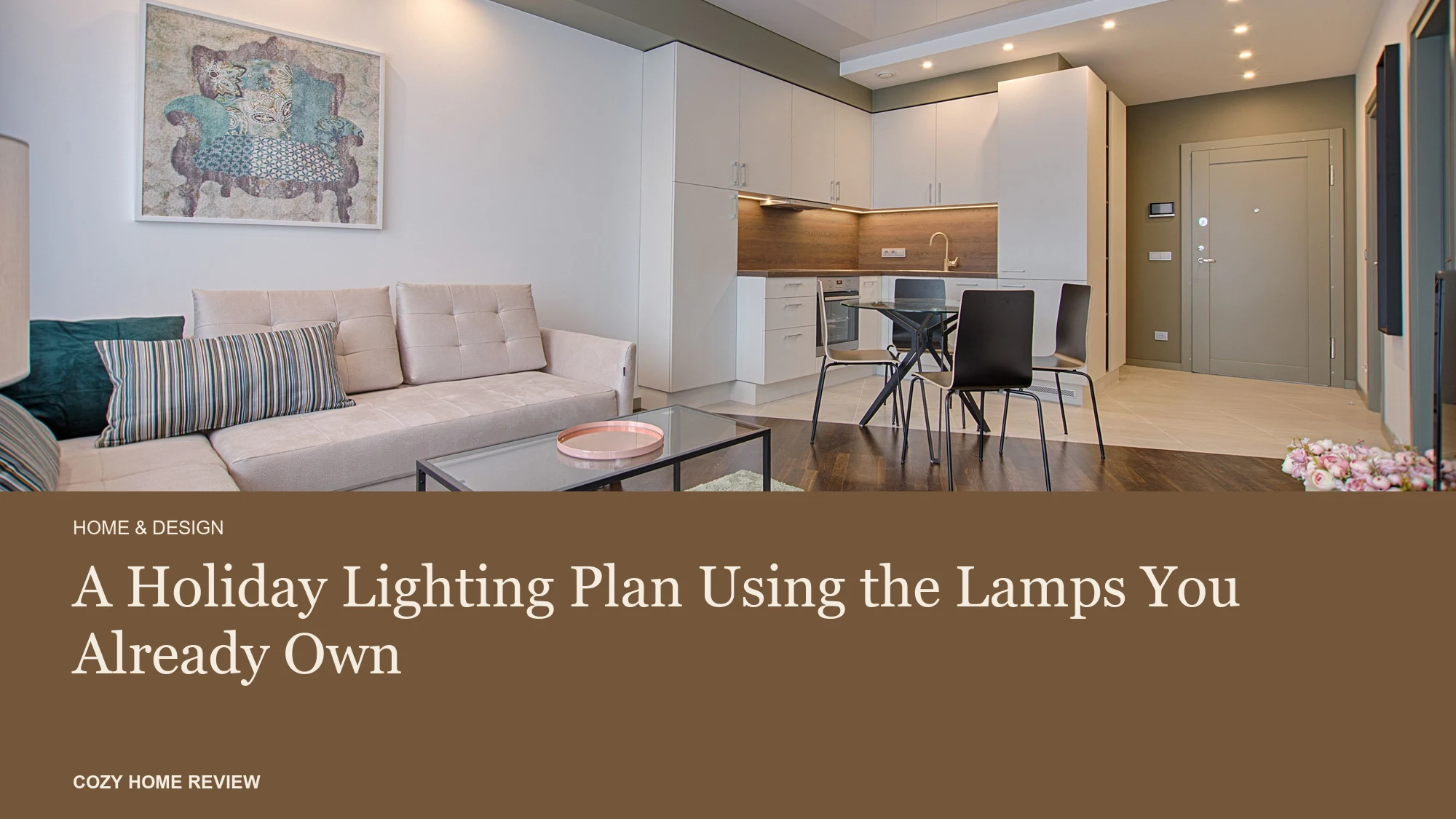
Start with one room and give each lamp a job. Decide what you want guests to notice from the doorway, trace the route to their seats, and mark the surface you’ll need to see clearly during cleanup. Then write down which lamps serve each of those spots at different points in the evening.
Draw the room you’ll actually use
On a sheet of paper, sketch the doorway, the main seats, and the furniture that shapes the walk between them. Mark where the lamps already sit and name them by location, such as console lamp or sofa lamp. Draw an arrow along the route guests will take after they enter. Circle the surfaces that need light, such as the side table where guests set down glasses and the table where you’ll gather them later.
Stand at the entrance and write down what each lamp actually helps you see. A lamp next to the sofa might do more for the side table than for the first chair a guest passes. Put that observation on the map. If a lamp serves both the walking route and a surface, give it both jobs.
Pick one thing to notice from the doorway
Try one seasonal accent on a surface an existing lamp already lights, such as a low bookcase or mantel. In a narrow room, that could be a small grouping on a shelf you see as soon as you step inside. In a wider room, stand back and see whether the arrangement still reads as a group across the room.
Use the manufacturer’s labels and directions for lamps and seasonal accents, including any placement or clearance limits. If that rules out your first display spot, look for another surface in the same view. Take a second look at what the display displaces. If it occupies the only convenient place to set a glass, give the accent a different home before you finalize the map.
Write a switch list for the evening
Use the same lamp names on the room sketch and the switch list so someone else can match each entry to the right switch.
Hypothetical example. In this living room, guests pass a console and the end of a coffee table on their way to the sofa. From the doorway, the mantel lamp draws attention to the paper stars. From an armchair, the lamp reflects in the glass of a framed picture. During cleanup, the dining table is where guests’ glasses will be sorted.
| Lamp | Arrivals | Conversation | Cleanup |
|---|---|---|---|
| Console lamp | On for the route in | On for the route past the coffee table | On for the route back to the doorway |
| Mantel lamp | On to highlight the paper stars | Off to remove the reflection from the chair’s view | Off |
| Sofa lamp | Off | On for the seating area and side table | On for gathering glasses from the side table |
| Dining table lamp | Off | Off | On to light the dining table for sorting glasses |
Copy one row per lamp. For arrivals, conversation, and cleanup, mark each lamp on or off. Note what it lights when on and any reason that matters for keeping it off. Below the table, note any spot that needs another look and when you’ll need light there.
| Lamp on the sketch | Arrivals | Conversation | Cleanup |
|---|---|---|---|
| ______ | ______ | ______ | ______ |
Lighting gap to recheck (place and phase) ______
Check the doorway and take a seat
After dark, switch on the arrival lights and walk from the doorway to the seats. Check that you can see the display, any turns or furniture edges along the route, and a place to set down a glass. Then switch to the conversation settings and sit in the chair with the clearest view of the display. Look toward the person you’d talk to and see whether a reflection pulls your attention away.
In the example, switching off the mantel lamp solves the seated distraction while the console lamp keeps the route visible. If guests settle into the armchair as soon as they arrive, check the conversation settings from the doorway before using them for arrivals. For cleanup, check the surface where dishes will actually collect. If they’ll land on the side table, the dining table lamp can stay off.
Recheck any spot that stays dark
If the far end of the dining table is still dark during cleanup, try gathering glasses at the lit end. Walk the route again with the cleanup lamps on. If the change works, update the switch list and leave it where you’ll see it before guests arrive.
Related reading
- How to Decorate a Rental for the Holidays Without Hanging Anything
- Holiday Table Settings When Your Plates Do Not Match
- How to Pack Christmas Decorations for Easy Setup Next Year
Sources and editorial notes
This is an editorial planning guide, not a hands-on product test. The references below provide seasonal background, not proof of demand for this exact topic. Suggestions and hypothetical examples are editorial interpretations; check current prices, availability and terms with the provider.
- IKEA U.S. — 2026-11-04 — The retailer announcement describes seasonal collections and events; it is not independent evidence of market demand.
Holiday Table Settings When Your Plates Do Not Match
Give every plate a place before you dress the table. This printable worksheet maps the same four plain plates and two patterned ones…
How to Decorate a Rental for the Holidays Without Hanging Anything
Give each holiday display a spot that leaves room for daily life. Use this placement worksheet to check your building rules and product…
How to Pack Christmas Decorations for Easy Setup Next Year
Choose one Christmas display that feels finished on its own, then pack for that setup first. A printable lid card lists what’s in…